The Coursya library
Engineering & Manufacturing Courses
Explore free study options. Check the provider, prerequisites, and certificate details before you begin.
Course results
102 courses
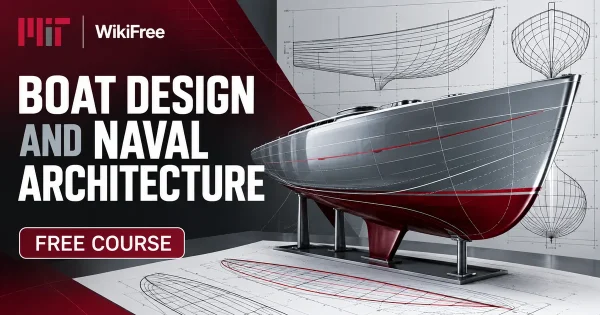
MIT Free Video
Study boat design through the principles of naval architecture. The recordings provide an engineering perspective on describing and evaluating vessels, with an emphasis on conceptual study.
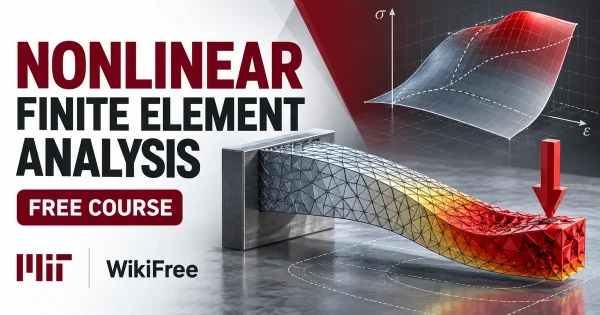
MIT Free Video
Study nonlinear finite-element methods for solids and structures. The lecture sequence develops an advanced computational framework for problems that extend beyond simple linear assumptions.
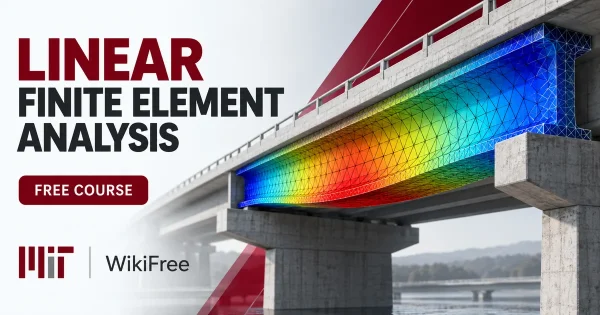
MIT Free Video
Develop the foundations of linear finite-element analysis for solids and structures. The lectures connect mathematical formulation with the numerical representation of engineering behavior.
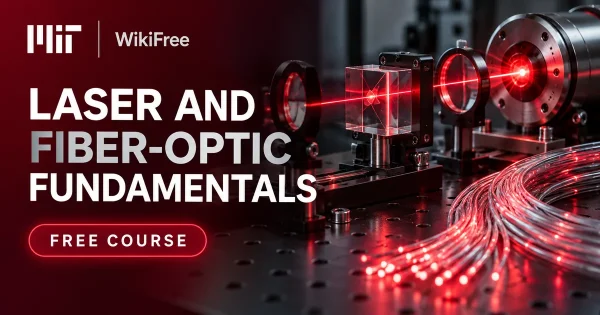
MIT Free Video
Develop an introduction to lasers and fiber optics through an extended lecture sequence. The videos explain core physical concepts that support optical sources and the transmission of…
MIT Free Video
Connect introductory electrical engineering and computer science through models, computation and physical systems. Lectures and recitations provide a foundation for reasoning across software and electronics.
MIT Free Video
Explore digital signal processing through MIT's lecture sequence. The course develops mathematical ways to represent, transform and analyze discrete signals and the systems that process them.
MIT Free Video
Examine nuclear-reactor safety as an academic engineering subject. The archived lectures introduce analytical concepts and system-level reasoning; they do not provide operator authorization or practical reactor training.
MIT Free Video
Study control for robots with fewer actuators than mechanical degrees of freedom. The lectures connect nonlinear dynamics with strategies for reasoning about motion and feedback.
MIT Free Video
Explore the control of manufacturing processes through an advanced engineering lecture sequence. The course connects process behavior, variation and feedback with questions about consistent production.
MIT Free Video
Develop circuit and electronics fundamentals through MIT lectures. The course connects component models with the analysis of electrical networks and the behavior of basic electronic systems.
MIT Free Video
Analyze engineering motion through reference frames, equations of motion and coupled systems. Lectures and recitations connect mathematical formulations with examples such as a double pendulum.
MIT Free Video
Study transport at small scales through statistical physics and molecular descriptions. Lectures connect heat capacity, diffusion, the Boltzmann equation and molecular simulation with nanoscale behavior.