The Coursya library
Biology Courses
Explore free study options. Check the provider, prerequisites, and certificate details before you begin.
Course results
36 courses
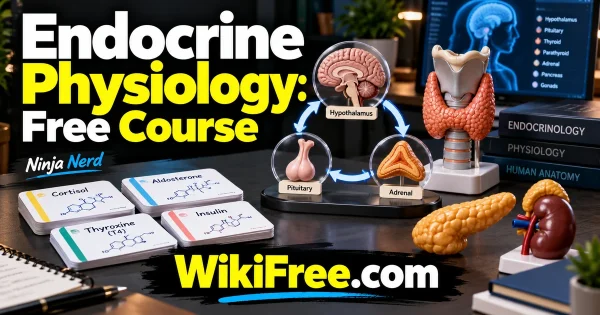
Ninja Nerd Free Video
Study hormone signaling and its physiological context in this free Ninja Nerd course. The full twenty-five-video playlist covers receptor pathways, hypothalamic-pituitary connections, major gland hormones and the…
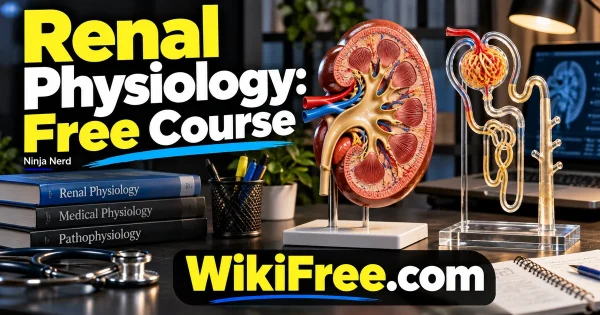
Ninja Nerd Free Video
Follow the nephron and the control of urine formation in this free renal-physiology course from Ninja Nerd. The full nine-video sequence includes kidney anatomy, filtration, the major…
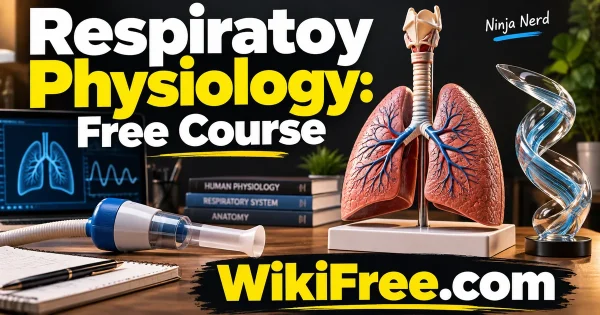
Ninja Nerd Free Video
Explore how breathing and gas exchange work in this free respiratory-physiology course from Ninja Nerd. All twenty source lectures are included, from respiratory anatomy and the three-part…
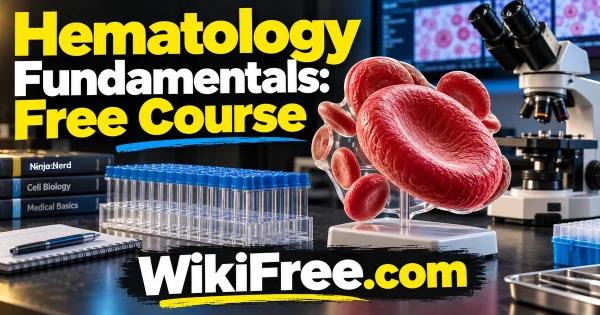
Ninja Nerd Free Video
Study the foundations of blood physiology through this free Ninja Nerd course. All ten hematology recordings are preserved, covering hematocrit, red-cell formation and lifespan, anemia and polycythemia…
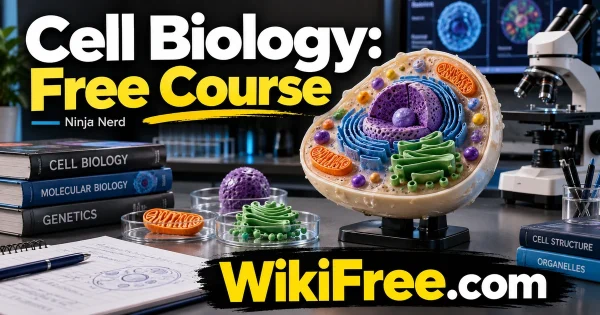
Ninja Nerd Free Video
Build a connected understanding of the cell through this free Ninja Nerd course. The complete nineteen-video teaching playlist covers the cell cycle, structure, transport, DNA processes, organelles…
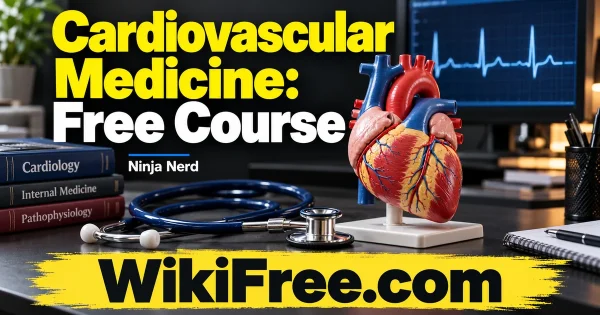
Ninja Nerd Free Video
Study the published cardiovascular-medicine teaching sequence from Ninja Nerd in this free course. All sixteen source lectures are available, covering ECG interpretation, rhythm disorders, ischemic and structural…
Yale Free Video
Evolutionary thinking offers another way to investigate why humans are vulnerable to disease. This free Yale course connects natural selection, biological variation and trade-offs with questions in…
Yale Free Video
Living systems can be studied across generations, environments and interactions between organisms. This free Yale course connects those perspectives through the foundations of evolution, ecology and behavior.
MIT Free Video
Explore algorithms used to study genomes, RNA and protein networks. MIT lectures connect computational methods with biological questions about sequence, structure and interaction.
MIT Free Video
Investigate how neural systems process vision and hearing. Lectures connect adaptation, color, eye movements and auditory responses with methods for understanding sensory computation.
MIT Free Video
Investigate biological systems through network motifs, feedback, robustness and adaptation. The lectures connect simplified mathematical models with patterns found in cells and developing organisms.
MIT Free Video
Build an introduction to modern biology through cells, gene regulation, genomes and cancer biology. MIT lectures connect molecular mechanisms with the behavior and organization of living systems.