The Coursya library
Algorithms & Data Structures Courses
Explore free study options. Check the provider, prerequisites, and certificate details before you begin.
Course results
14 courses

Notez (Rent a Mind) Free
A blockchain becomes easier to discuss when you can separate its moving parts: a record, a cryptographic hash, a block and the network that checks it. This…
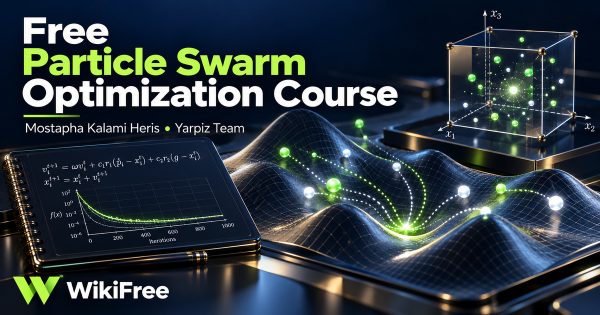
Yarpiz Team; Mostapha Kalami Heris Free
Particle swarm optimization searches through candidate solutions by updating their positions using individual and shared experience. This free course explains that mechanism and implements it step by…
Princeton University Free
Connections between objects create problems that simple lists cannot represent well.
Princeton University Free
Running a program on a few examples is not the same as predicting its behaviour at scale.
Princeton University Free
Choosing a data structure changes what a program can do efficiently.
freeCodeCamp Free Video
Free freeCodeCamp recorded course on Data Structures and Algorithms in JavaScript. Study all 13 source recordings with the on-site classroom and completion tracking.
Simplilearn Free Video
Learn data structures and algorithms with free video lessons from Simplilearn. Arrays, linked lists, stacks, queues, trees, graph traversal, searching and sorting algorithms. Study at your own…

MIT Free Video
Explore algorithms and geometry through linkages, origami, rigidity and unfolding. The lectures connect physical folding questions with mathematical proofs and computational problems.

MIT Free Video
Study advanced data structures through persistence, cache-aware reasoning, trees and memory models. MIT lectures emphasize the design trade-offs behind efficient information storage and access.

MIT Free Video
Study the limits of efficient computation through reductions, satisfiability and hardness of approximation. MIT lectures connect formal complexity classes with examples of difficult algorithmic problems.

MIT Free Video
Explore what computation can and cannot do. The lectures progress through automata, formal languages and Turing machines toward computability, complexity and provably difficult problems.

MIT Free Video
Extend your algorithmic toolkit through amortized analysis, augmented structures, matching and parameterized complexity. MIT lectures focus on design techniques and arguments about efficiency.