The Coursya library
Free Online Courses
Explore free study options. Check the provider, prerequisites, and certificate details before you begin.
Course results
4936 courses
Explore connections among neuroscience, cognition and artificial intelligence. This lecture collection presents research perspectives on learning, brain measurement, information and computational models of vision.
Examine community approaches to climate action through local measurements, methane leaks and carbon footprints. Sessions connect scientific observation with the choices communities can discuss and evaluate.
Study vibrations and waves through oscillation, wave equations, Fourier ideas and electromagnetic examples. MIT lectures and supporting recordings connect physical intuition with mathematical models.
Practice computational thinking by solving puzzles in Python. The course uses constrained, concrete problems to develop algorithmic reasoning and show how a solution becomes a program.
Explore advanced topics in cognitive robotics through path planning, localization, image classification and tree search. This selected lecture sequence focuses on autonomous decision-making techniques.
Study the planning and operation of public transportation. MIT lectures connect short-range planning, performance models and traffic priority with the practical constraints of urban transit systems.
Learn how statistical models support practical decisions using the Analytics Edge materials. The videos combine R demonstrations with regression and case studies involving health, costs and other…
Continue advanced quantum-mechanics study through perturbation theory, semiclassical approximations, atom-light interactions and molecular examples. The short lessons break demanding derivations into focused parts.
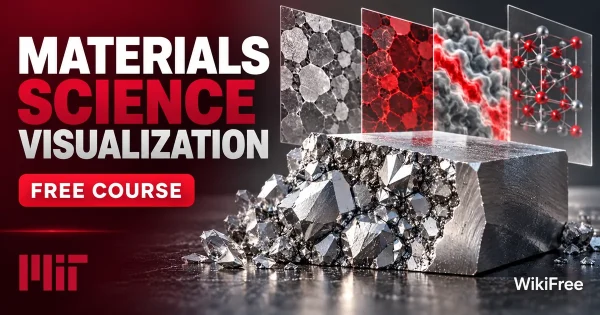
Explore materials-science concepts through student-created visualizations and computational demonstrations. Examples include diffraction, quantum evolution, Brillouin zones and stress representations; this is a case-study collection.
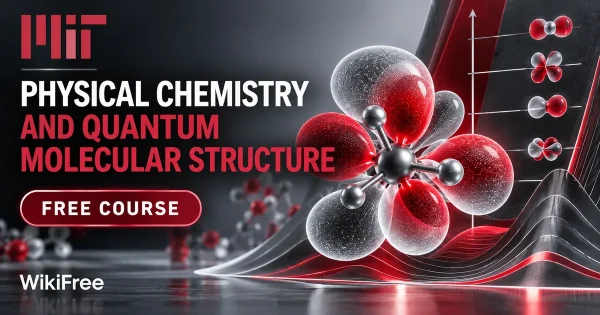
Connect quantum mechanics with molecular structure and spectroscopy. The lectures develop wave-mechanical ideas and the use of light and electronic-structure models to investigate molecules.
Study the engineering foundations of cryptocurrencies through signatures, hashes, wallets, transactions and privacy mechanisms. The lectures focus on protocol design and technical trade-offs, not investment selection.
Investigate how innovation depends on organizations, policy and economic conditions. The course examines growth, manufacturing, collaboration and energy-technology transitions through a systems perspective.