The Coursya library
Free Online Courses
Explore free study options. Check the provider, prerequisites, and certificate details before you begin.
Course results
4936 courses
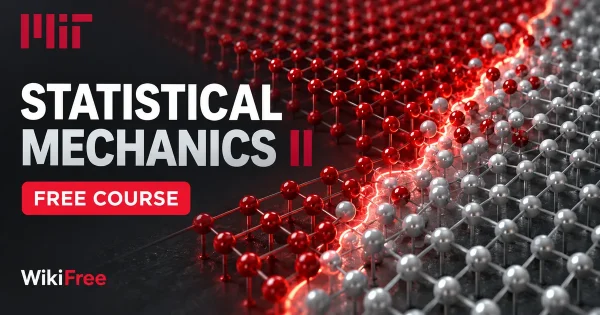
Study collective behavior and phase transitions using field-based statistical mechanics. Advanced lectures develop scaling, renormalization and expansion methods for interacting physical systems.

Analyze computer security through threat models, isolation, network defenses and authentication. The lectures connect system design with the assumptions that determine whether a protection is effective.
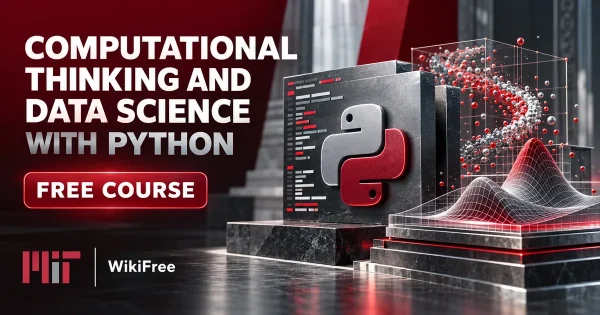
Use Python to study optimization, randomness and evidence from data. The lectures connect computational models with confidence intervals and the interpretation of experimental results.

Explore the systems-engineering process through requirements, design and multidisciplinary trade-offs. The playlist combines instructional lectures with project and teaching reflections from the original course.

Study probability and strategic reasoning through academic examples from Texas Hold'em. The lectures discuss postflop decisions, tournament models and combinatorial hand analysis without requiring real-money play.

Develop the foundations of quantum mechanics through wavefunctions, time evolution and one-dimensional systems. Focused lessons introduce the mathematical framework behind uncertainty, bound states and scattering.
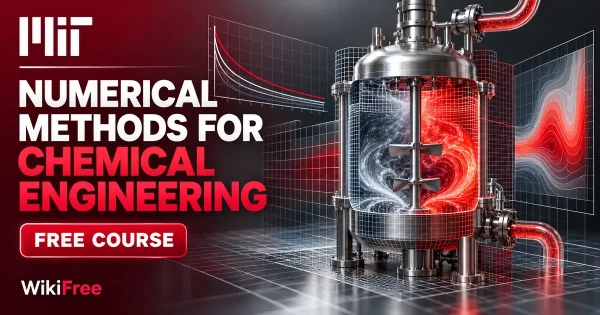
Study numerical techniques used in chemical engineering, including eigenvalue methods, optimization and differential equations. The lectures connect mathematical algorithms with the structure of engineering problems.

Examine environmental decision-making through scenarios involving policy, ethics, impact assessment and risk. The collection encourages comparison of interests, evidence and institutions in planning choices.
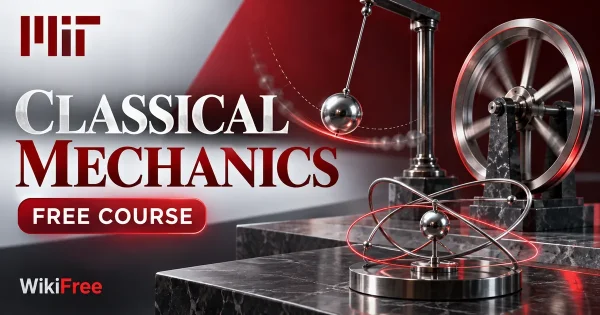
Learn classical mechanics through motion, forces, momentum, energy and rotational systems. Short MIT lessons provide a structured route through physical models and worked quantitative examples.
Develop statistical-inference methods through estimation, likelihood, goodness-of-fit testing and Bayesian reasoning. MIT lectures explain how assumptions connect observed data with conclusions about an underlying process.
Review the chemical logic of biochemical reactions through carbonyl chemistry, redox balance and metabolic examples. The focused videos connect reaction mechanisms with biological function.

Build probability skills through carefully sequenced short lectures. The course develops probabilistic models, random variables, expectation and inference, with worked examples that connect abstract rules to concrete…