The Coursya library
Mathematics & Science Courses
Explore free study options. Check the provider, prerequisites, and certificate details before you begin.
Course results
219 courses
MIT Free Video
Develop atomic and optical physics through resonance, atomic structure, light-matter interactions and spectral line broadening. The course emphasizes the physical models behind experimental observations.
MIT Free Video
Investigate biological systems through network motifs, feedback, robustness and adaptation. The lectures connect simplified mathematical models with patterns found in cells and developing organisms.
MIT Free Video
Build a foundation in chemistry through atomic structure, bonding, thermodynamics and electrochemistry. MIT lectures connect microscopic explanations with observable chemical behavior and quantitative reasoning.
MIT Free Video
Develop the foundations of quantum mechanics through wavefunctions, time evolution and one-dimensional systems. Focused lessons introduce the mathematical framework behind uncertainty, bound states and scattering.
MIT Free Video
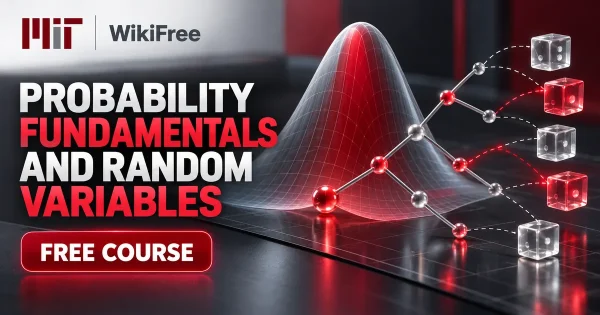
Build probability skills through carefully sequenced short lectures. The course develops probabilistic models, random variables, expectation and inference, with worked examples that connect abstract rules to concrete…
MIT Free Video
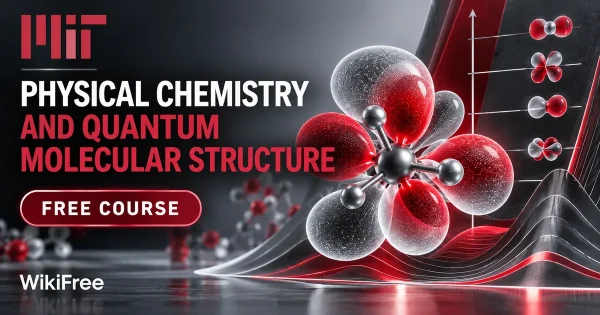
Connect quantum mechanics with molecular structure and spectroscopy. The lectures develop wave-mechanical ideas and the use of light and electronic-structure models to investigate molecules.
MIT Free Video
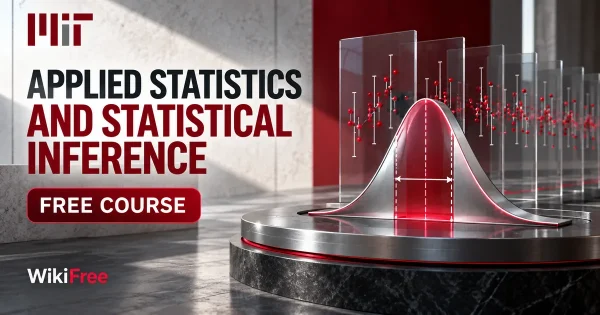
Develop statistical-inference methods through estimation, likelihood, goodness-of-fit testing and Bayesian reasoning. MIT lectures explain how assumptions connect observed data with conclusions about an underlying process.
MIT Free Video
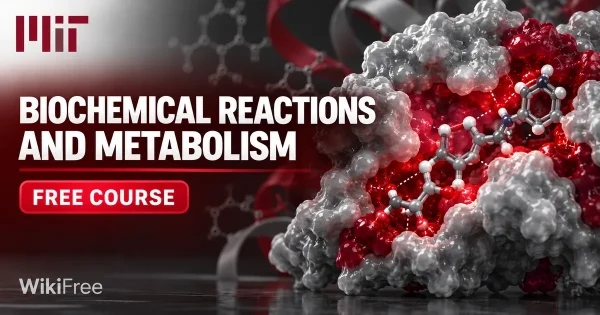
Review the chemical logic of biochemical reactions through carbonyl chemistry, redox balance and metabolic examples. The focused videos connect reaction mechanisms with biological function.
MIT Free Video
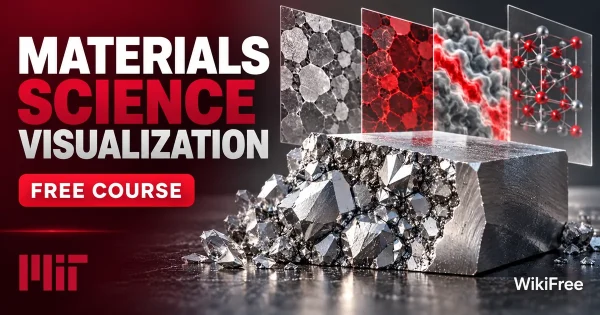
Explore materials-science concepts through student-created visualizations and computational demonstrations. Examples include diffraction, quantum evolution, Brillouin zones and stress representations; this is a case-study collection.
MIT Free Video
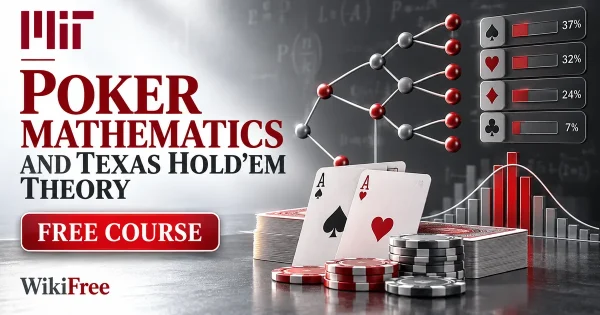
Study probability and strategic reasoning through academic examples from Texas Hold'em. The lectures discuss postflop decisions, tournament models and combinatorial hand analysis without requiring real-money play.
MIT Free Video
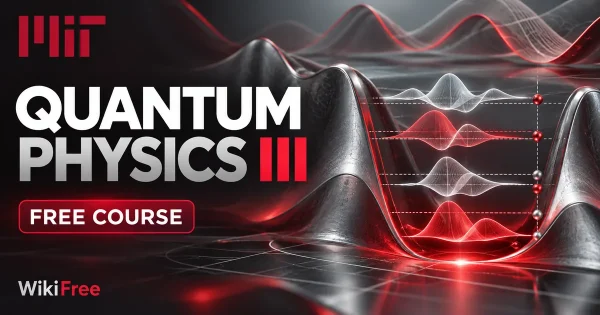
Continue advanced quantum-mechanics study through perturbation theory, semiclassical approximations, atom-light interactions and molecular examples. The short lessons break demanding derivations into focused parts.
MIT Free Video
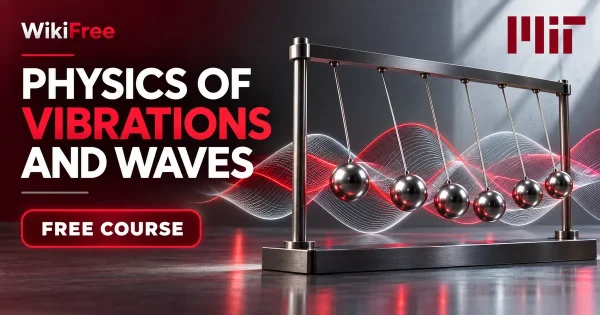
Study vibrations and waves through oscillation, wave equations, Fourier ideas and electromagnetic examples. MIT lectures and supporting recordings connect physical intuition with mathematical models.