The Coursya library
Mathematics & Science Courses
Explore free study options. Check the provider, prerequisites, and certificate details before you begin.
Course results
219 courses
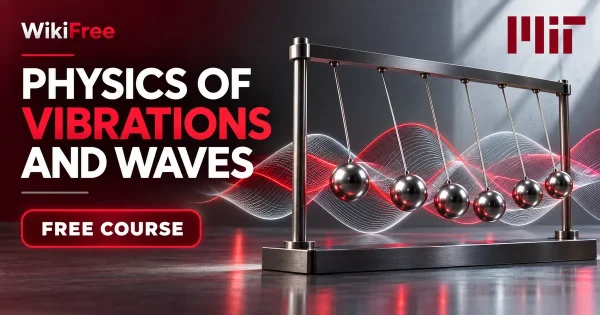
MIT Free Video
Study vibrations and waves through oscillation, wave equations, Fourier ideas and electromagnetic examples. MIT lectures and supporting recordings connect physical intuition with mathematical models.
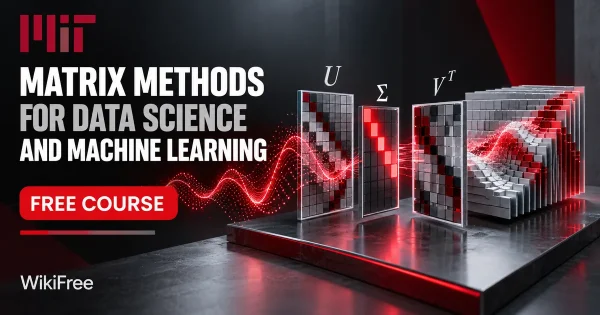
MIT Free Video
Study matrix techniques that support data science and machine learning. The lectures connect norms, singular values, low-rank structure and neural networks with practical mathematical reasoning.
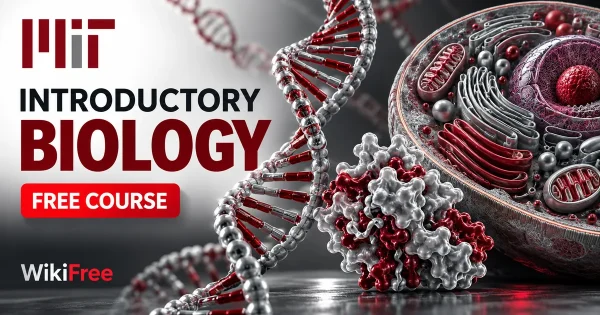
MIT Free Video
Build an introduction to modern biology through cells, gene regulation, genomes and cancer biology. MIT lectures connect molecular mechanisms with the behavior and organization of living systems.
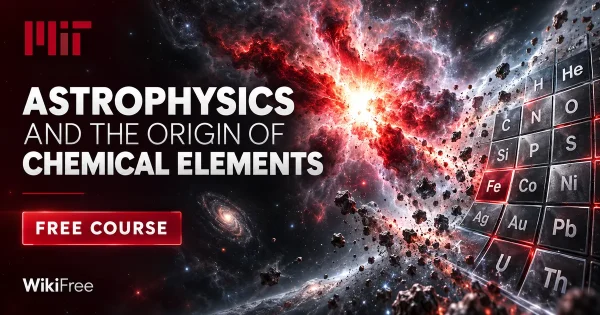
MIT Free Video
Trace the origin of chemical elements through cosmic evolution and stellar processes. The short episodes connect observations of stars with the physical mechanisms that build matter.
MIT Free Video
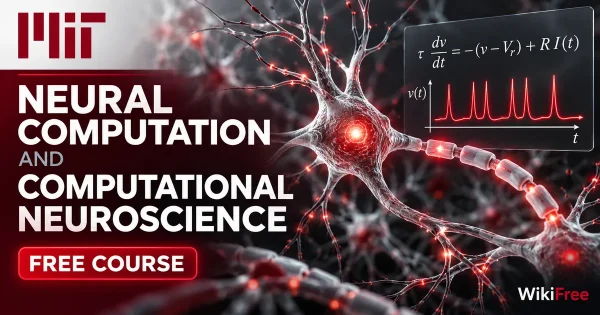
Study nervous systems through computational models. The course connects ionic currents and dendrites with signal analysis and representations, providing a quantitative route into neural computation.
MIT Free Video
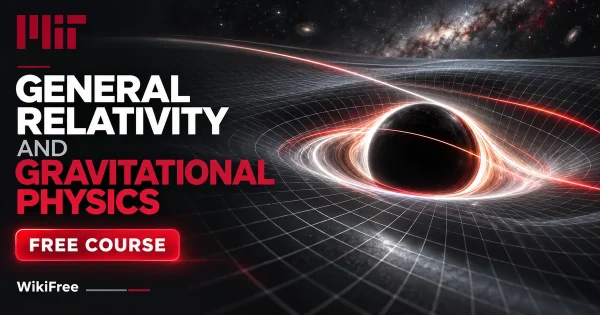
Develop a geometric view of gravity through equivalence, spacetime curvature and gravitational radiation. These advanced lectures connect the mathematical framework of general relativity with physical reasoning.

MIT Free Video
Study mathematical representations used in large-scale data analysis. The collection connects associative arrays, machine learning and worked computational examples, including sequence comparison.
MIT Free Video
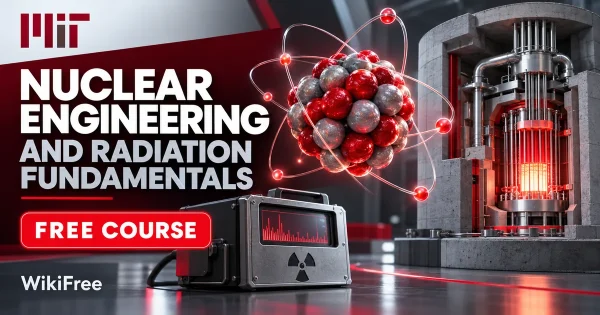
Explore radiation and nuclear-engineering concepts through historical discoveries, radioactive decay, interactions and reactor examples. The recordings provide academic background rather than operational training.
MIT Free Video
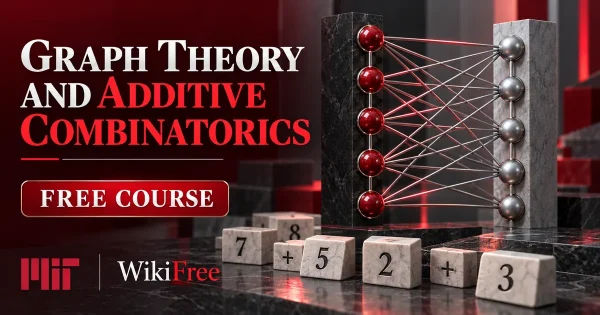
Explore the interplay between graph theory and additive combinatorics. Advanced lectures develop regularity methods, removal lemmas and arithmetic-structure results through detailed proofs.
MIT Free Video
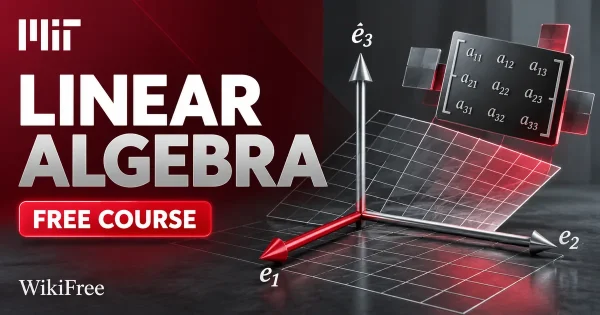
Develop a systematic understanding of linear algebra through systems of equations, vector spaces, orthogonality and eigenvalues. Lectures and supporting videos connect matrix calculations with geometric meaning.
MIT Free Video
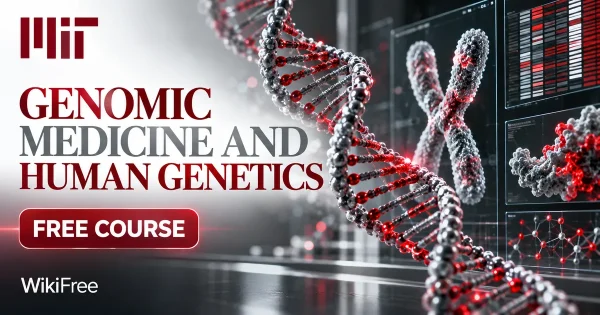
Explore how genomic data inform the study of human variation and disease. The lectures examine measurement technologies, information resources, markers and examples involving complex traits.
MIT Free Video
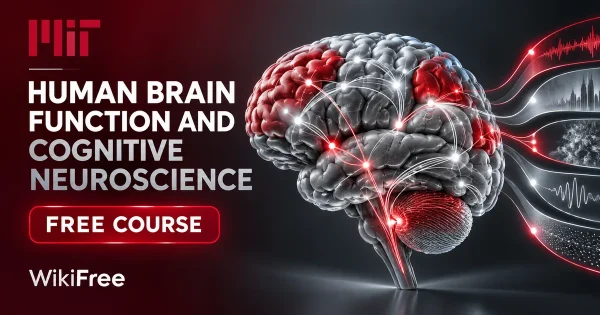
Investigate how human brain systems support cognition. Lectures discuss research methods, navigation, development and networks, connecting experimental evidence with questions about mental function.