Free MIT Course: Discrete Stochastic Processes
Develop models for systems that evolve randomly in discrete steps. The lectures examine Markov chains, rewards, dynamic programming and related tools for analyzing stochastic behavior.
University
University courses and open learning
Explore MIT courses and learning resources listed on Coursya. Search the complete catalogue, compare subjects and levels, and follow new additions.
See matching new resources in your interests feed.
Choose your next step
Showing 49–72 of 220 listings.

Develop models for systems that evolve randomly in discrete steps. The lectures examine Markov chains, rewards, dynamic programming and related tools for analyzing stochastic behavior.

Study nuclear systems as a multidisciplinary engineering-design problem. Lectures and project presentations examine requirements, trade-offs and nonconventional reactor concepts at an academic level.

Trace MIT's development alongside changing ideas about technology and education. The lectures examine institutional history, wartime research, aerospace, computing and campus life.

Explore economic approaches to poverty through education, credit and policy evaluation. MIT lectures connect concrete development questions with evidence about how interventions affect people's opportunities.

Study transport at small scales through statistical physics and molecular descriptions. Lectures connect heat capacity, diffusion, the Boltzmann equation and molecular simulation with nanoscale behavior.

Explore electromagnetic engineering through recorded laboratory introductions and demonstrations. Topics include motors, magnetic effects, spectroscopy and tunneling; equipment and supervised laboratory participation are not included.

Learn introductory MATLAB programming through files, functions, scripts and debugging. The short video sequence explains how to organize simple computations and inspect common programming problems.

Develop signals-and-systems reasoning through time-domain and frequency-domain representations. MIT lectures connect continuous and discrete signals with the mathematical description of system behavior.

Explore energy technologies in the context of sustainable development. The recordings combine lectures, laboratory demonstrations and project presentations involving fuels, conversion and practical energy needs.

Examine energy choices through economics, policy and the structure of energy systems. Lectures discuss household use, shale resources and growth, emphasizing trade-offs among different objectives.

Develop finance-theory concepts through fixed-income securities, portfolio models and market efficiency. The lectures provide an academic framework for valuation and uncertainty rather than personalized investment guidance.

Study feedback in electronic and dynamic systems through stability, frequency response and nonlinear examples. The lectures connect analysis techniques with demonstrations of controlled physical behavior.

Learn introductory Italian through language instruction and food-related vocabulary. The recordings combine linguistic explanations with cooking demonstrations as a context for practicing everyday words and expressions.

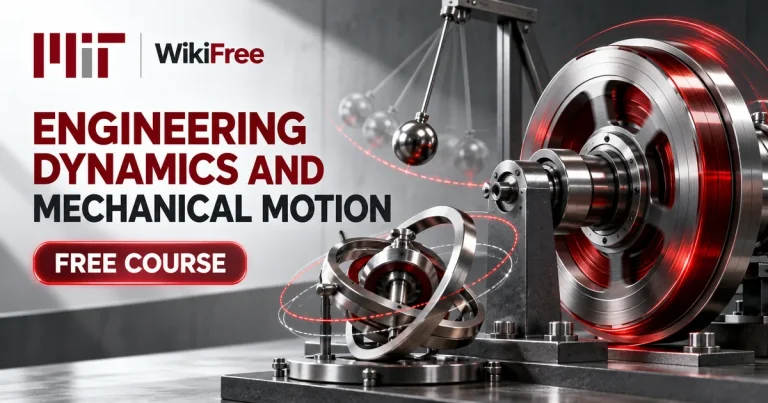
Analyze engineering motion through reference frames, equations of motion and coupled systems. Lectures and recitations connect mathematical formulations with examples such as a double pendulum.

Practice solving vibrations-and-waves problems through guided examples. The videos cover oscillations, coupled systems, standing waves and interference, complementing a lecture-based physics course.

Examine theories of urban form through historical transformations and competing city models. The recordings connect architectural ideas with the complexities of urban development and planning.

Study advanced data structures through persistence, cache-aware reasoning, trees and memory models. MIT lectures emphasize the design trade-offs behind efficient information storage and access.

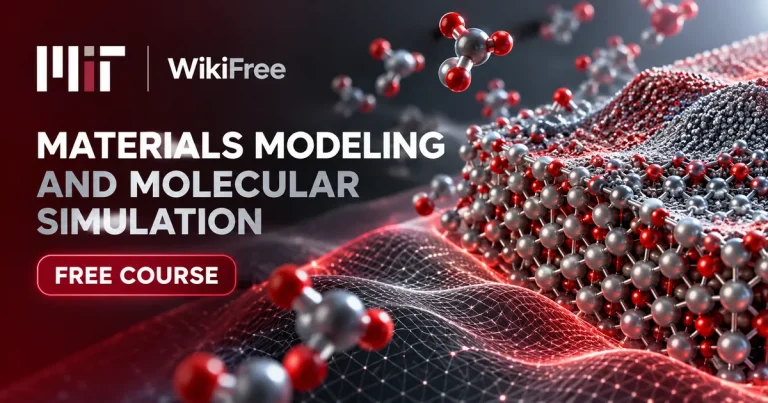
Explore quantum and atomistic methods for modeling materials. The selected lectures connect molecular descriptions, electronic structure and solid-state properties with technological examples.

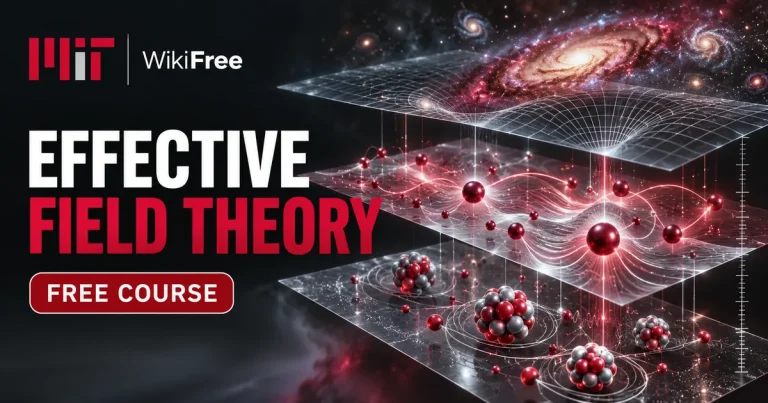
Study effective field theory as a framework for separating physical scales. Advanced lectures develop matching and applications involving heavy particles, collinear behavior and high-energy physics.

Examine development at the macroeconomic level through finance, measurement, labor and model-based evaluation. The lectures connect economic growth questions with empirical and structural approaches.

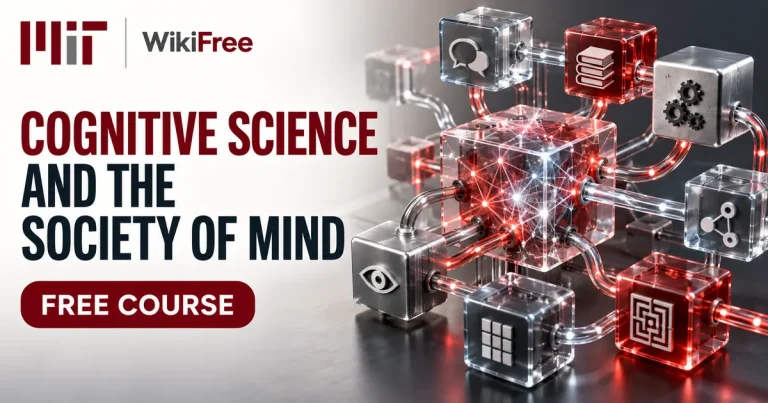
Explore Marvin Minsky's Society of Mind perspective on cognition. The lectures examine emotion, common sense and the organization of mental processes through a conceptual approach to intelligence.

Study how information moves through communication systems. The course connects entropy, physical transmission and packet switching with the organization and historical development of networks.

Review dynamics through kinematics, particle systems and rolling-motion examples. This selected lecture sequence emphasizes setting up and interpreting mathematical descriptions of mechanical motion.

Explore entrepreneurship through the process of identifying markets and building an enterprise. Short lessons challenge common assumptions and connect market segmentation with the foundations of a viable business.
Need a starting point?
Connect the teaching to a small process or project. Define a measurable problem, map the current situation and test an improvement using comparable data.
9 matching listingsCheck programming and mathematics prerequisites before starting. Work through exercises and record the assumptions behind your calculations.
43 matching listingsStudy probability, statistical reasoning and data methods. Choose the prerequisites you need, work through examples and explain the assumptions behind each conclusion.
19 matching listingsThis page brings together the published, available listings assigned to MIT on Coursya. New listings appear automatically. Counts refer to our current library; the provider may offer additional courses elsewhere.
Read each course page for prerequisites, study time, learning access and recognition. Free learning does not always include a free certificate, exam, software or hosted lab. Listings marked unavailable or awaiting review are excluded.
Choose whether to allow Google Analytics to measure visits, or also Meta to measure how our Facebook and Instagram ads lead to content views and purchases. Optional tracking stays off until you allow it. You can change your choice at any time. Privacy details