The Missing Semester: Free Developer Tools Course
Build a more capable development workflow with the tools that sit around your code. This free MIT Missing Semester course brings together nine lectures on the shell, development environments,…
University
University courses and open learning
Explore MIT courses and learning resources listed on Coursya. Search the complete catalogue, compare subjects and levels, and follow new additions.
See matching new resources in your interests feed.
Choose your next step
Learning route: Computing and quantitative subjects · Show all routes
Showing 1–24 of 43 listings.

Build a more capable development workflow with the tools that sit around your code. This free MIT Missing Semester course brings together nine lectures on the shell, development environments,…

Study compiler construction and computer-language engineering through MIT lectures. The course develops a systems perspective on transforming and implementing programming languages.

Study the engineering of computer systems through selected MIT lectures. The course emphasizes how larger systems are organized and how design choices affect their behavior and reliability.

Extend calculus to several variables through vectors, gradients and multiple integration. MIT lectures connect geometric intuition with the techniques used to analyze fields and multivariable functions.

Explore multicore programming through lectures, recitations and project examples. The recordings introduce parallel-computing ideas in their original hardware and software context.

Learn single-variable calculus through a systematic MIT lecture sequence. The course develops differentiation and integration as tools for reasoning about functions, change and accumulated quantities.

Practice multivariable calculus through MIT's worked-problem videos. The collection supports revision of vectors, partial derivatives and integration in several variables alongside a lecture-based course.

Practice single-variable calculus through worked recitation problems. The videos focus on techniques and applications involving differentials, integration and series, complementing a full lecture course.

Build a concise conceptual introduction to calculus through derivatives, integrals and important function families. Short explanations highlight the connections among rates of change, graphs and accumulation.

Review complex variables together with differential equations and linear algebra. This multi-part lecture collection connects several mathematical tools used in science and engineering.

Study mathematical methods used in computational science and engineering. MIT lectures and recitations connect matrix-based reasoning with numerical representations of physical and engineering problems.

Learn introductory MATLAB programming through files, functions, scripts and debugging. The short video sequence explains how to organize simple computations and inspect common programming problems.

Study advanced data structures through persistence, cache-aware reasoning, trees and memory models. MIT lectures emphasize the design trade-offs behind efficient information storage and access.

Explore AI game programming through MIT's Battlecode teaching sessions. The videos examine navigation, strategic algorithms and lessons from a programming tournament rather than offering access to a current competition.

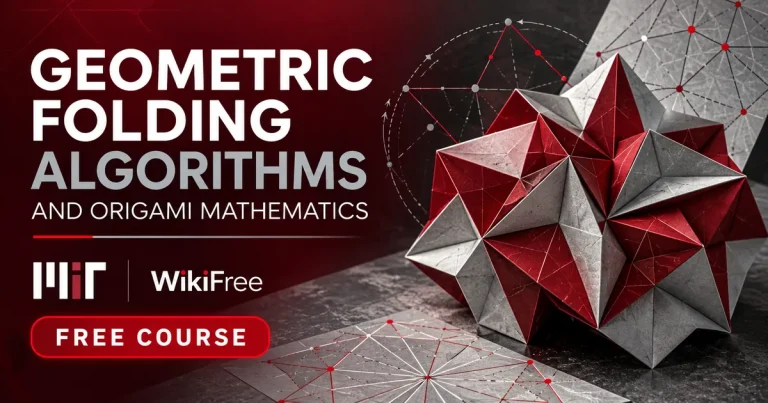
Explore algorithms and geometry through linkages, origami, rigidity and unfolding. The lectures connect physical folding questions with mathematical proofs and computational problems.

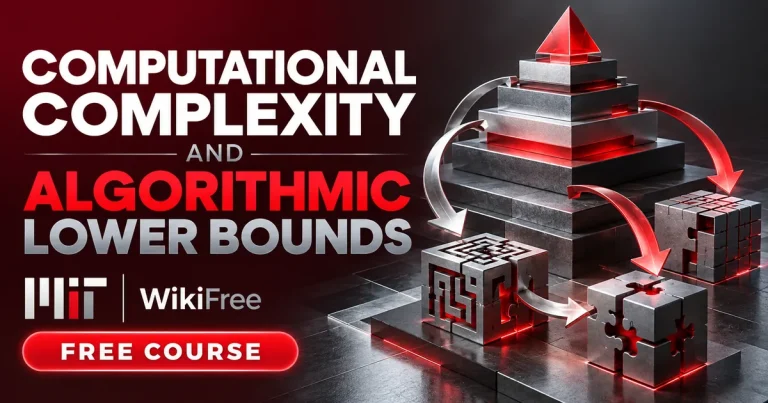
Study the limits of efficient computation through reductions, satisfiability and hardness of approximation. MIT lectures connect formal complexity classes with examples of difficult algorithmic problems.

Explore the collaborative production of video games through project work and design discussions. The recordings include classroom instruction, presentations, studio perspectives and reflections on the development process.

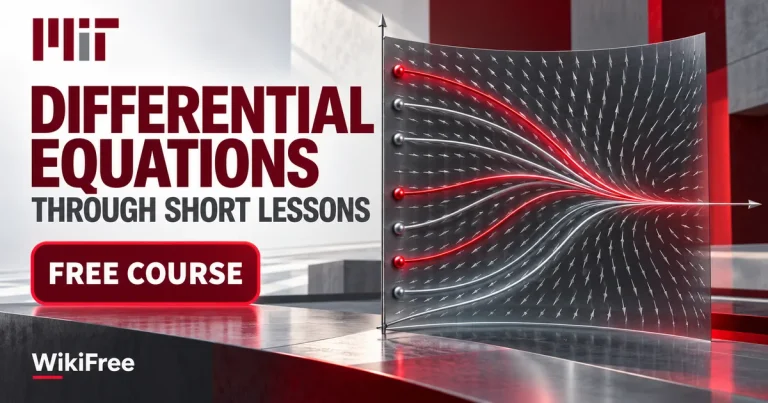
Learn differential equations through concise lessons on response, stability, transforms, matrices and numerical methods. The series combines analytic ideas with demonstrations from the MATLAB ODE suite.

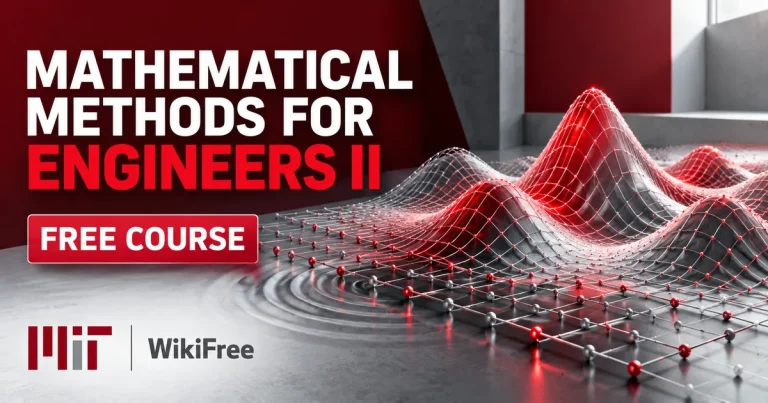
Study advanced mathematical methods for engineering through MIT's second-course lecture sequence. The recordings develop computational approaches for analyzing mathematical models of physical systems.

Strengthen mathematical problem-solving foundations for entrance-exam preparation. The selected videos cover vectors, the binomial theorem, trigonometry, functions and geometry rather than a complete exam syllabus.

Practice computational thinking by solving puzzles in Python. The course uses constrained, concrete problems to develop algorithmic reasoning and show how a solution becomes a program.

Study the engineering foundations of cryptocurrencies through signatures, hashes, wallets, transactions and privacy mechanisms. The lectures focus on protocol design and technical trade-offs, not investment selection.

Study matrix techniques that support data science and machine learning. The lectures connect norms, singular values, low-rank structure and neural networks with practical mathematical reasoning.

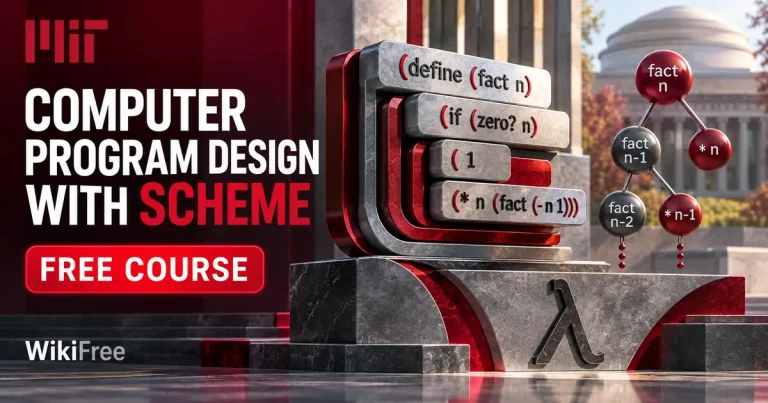
Explore the design of computer programs using Scheme and Lisp ideas. The lecture sequence develops abstraction, interpreters, streams and ways to manage computational complexity; repeated uploads are omitted.
Need a starting point?
Connect the teaching to a small process or project. Define a measurable problem, map the current situation and test an improvement using comparable data.
9 matching listingsCheck programming and mathematics prerequisites before starting. Work through exercises and record the assumptions behind your calculations.
43 matching listingsStudy probability, statistical reasoning and data methods. Choose the prerequisites you need, work through examples and explain the assumptions behind each conclusion.
19 matching listingsThis page brings together the published, available listings assigned to MIT on Coursya. New listings appear automatically. Counts refer to our current library; the provider may offer additional courses elsewhere.
Read each course page for prerequisites, study time, learning access and recognition. Free learning does not always include a free certificate, exam, software or hosted lab. Listings marked unavailable or awaiting review are excluded.
Choose whether to allow Google Analytics to measure visits, or also Meta to measure how our Facebook and Instagram ads lead to content views and purchases. Optional tracking stays off until you allow it. You can change your choice at any time. Privacy details