Free MIT Course: History of Modern Physics
Trace major changes in modern physics through relativity, quantum theory and the nuclear era. Historical lectures examine scientific ideas alongside education, institutions, secrecy and public life.
University
University courses and open learning
Explore MIT courses and learning resources listed on Coursya. Search the complete catalogue, compare subjects and levels, and follow new additions.
See matching new resources in your interests feed.
Choose your next step
Showing 169–192 of 220 listings.

Trace major changes in modern physics through relativity, quantum theory and the nuclear era. Historical lectures examine scientific ideas alongside education, institutions, secrecy and public life.

Explore health-system improvement through research, quality methods, process analysis and patient-safety examples. These academic recordings emphasize organizational learning rather than individual medical diagnosis or treatment.

Learn to design and analyze algorithms using sorting, graph traversal, shortest paths and other core techniques. Lectures and problem sessions connect data structures with correctness and computational efficiency.

Study the organization and development of the nervous system. The lectures move between anatomy and function, including spinal pathways, motor systems, auditory processing and hypothalamic and limbic structures.

Investigate animal behavior through ethology, communication, social organization and evolutionary explanation. MIT lectures connect observed behavior with competing ways of interpreting its biological and cultural context.

Develop matrix-calculus techniques used in optimization and machine learning. The lectures examine vectorization, gradients, inner products, automatic differentiation and variations of functionals.
Study the physical processes used to manufacture silicon devices. The available lectures examine wafers, oxidation, interfaces, dopant diffusion, thin films and epitaxial growth.

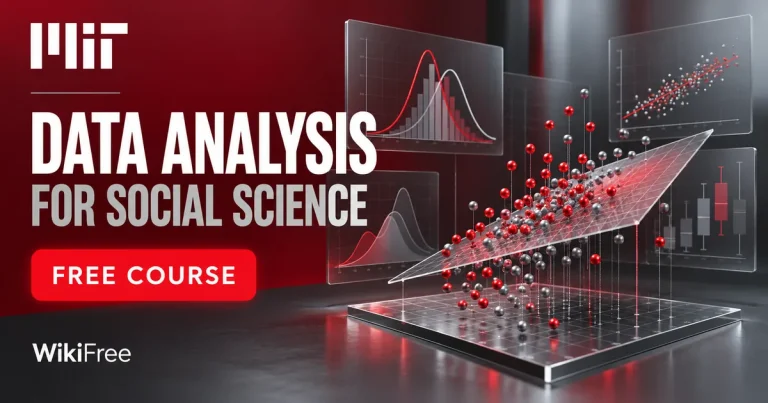
Learn to reason with data in social-science research. The lectures connect descriptive statistics and probability with regression, confidence intervals, hypothesis tests and statistical power.

Explore Old English through pronunciation, grammatical cases, pronouns, nouns, verbs and adjectives. These selected classroom recordings focus on the language tools needed for reading early English texts.

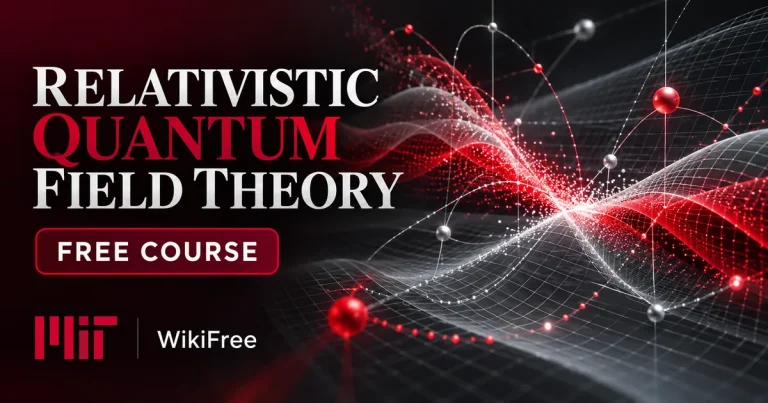
Develop the foundations of relativistic quantum field theory through classical fields, propagators, correlation functions, perturbation theory and quantized matter and electromagnetic fields.

Study how an economy behaves at the aggregate level. The course connects output, interest rates and inflation with growth, cross-country differences and exchange-rate regimes.

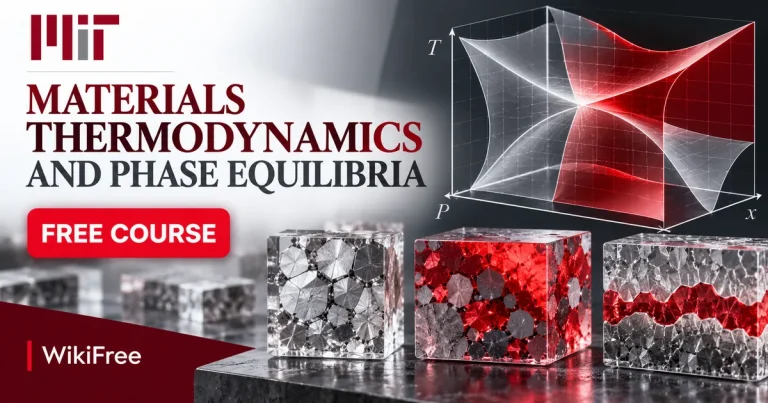
Connect thermodynamic principles with materials behavior. The lectures progress from energy and ideal gases to mixtures, solution models, stability and the construction of phase diagrams.

Develop advanced Japanese grammar through focused recordings for lessons six through ten of MIT's Japanese VI sequence. These grammar videos complement the separate kanji materials and assume established Japanese…

Explore how electronic circuits convert and control electrical power. MIT lectures develop converter behavior, switching losses, snubbers, multiphase systems and electromagnetic-interference filtering.

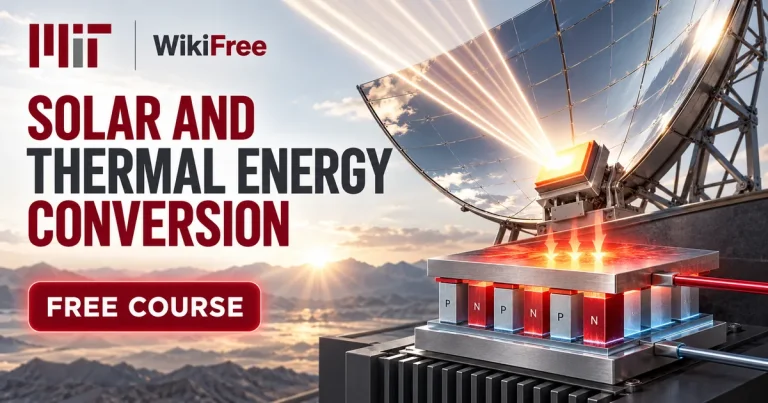
Study selected lectures on converting thermal and solar energy into electricity. The available sequence emphasizes thermoelectric devices, energy states and transport-based explanations of thermoelectric behavior.

Examine the economics of greener buildings and property markets. The lectures connect building performance, health, urban development, climate risk and policy with real-estate decision-making.

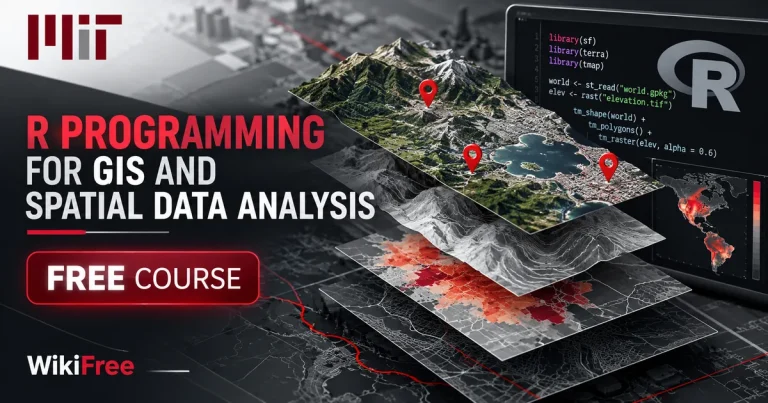
Combine introductory R programming with geographic information systems. The lessons move from data structures and statistical models to projections, maps and extracting information from spatial data.

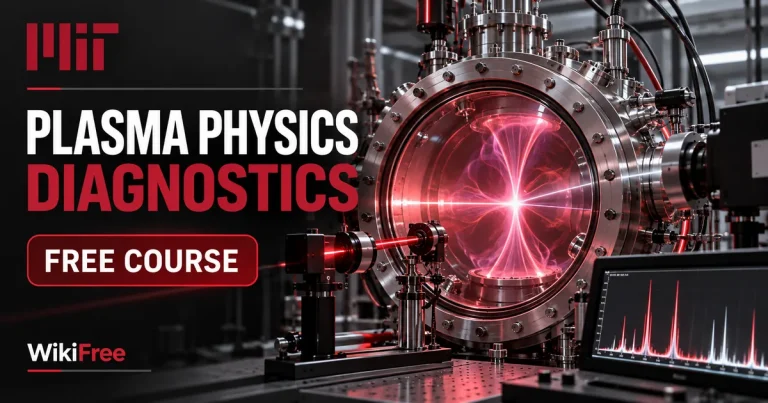
Study methods used to infer plasma properties from measurements. Lectures cover refractive-index techniques, radiation-based diagnostics, bolometry and imaging, with emphasis on interpreting physical signals.

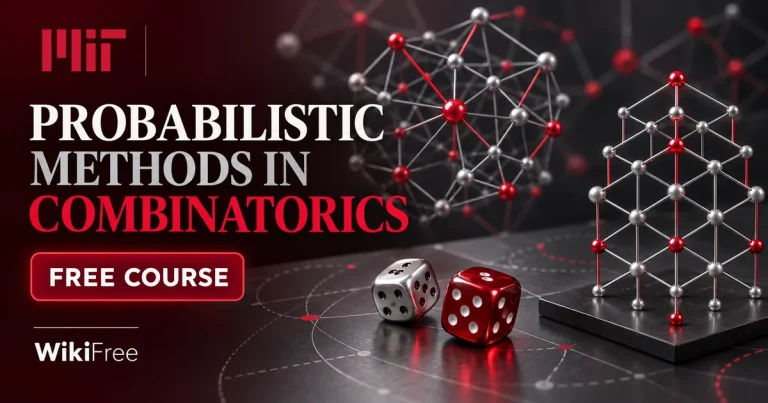
Learn how probability can establish combinatorial results. The videos work through expectations, extremal questions and concentration bounds, illustrating the probabilistic method through mathematical examples.

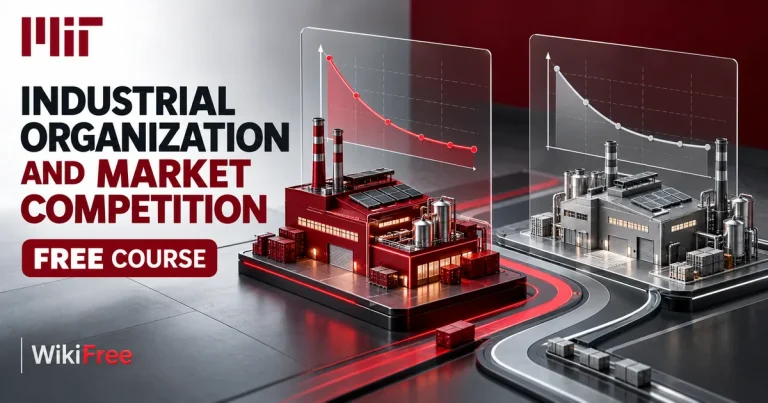
Analyze how firms compete and how market structure affects their choices. Advanced MIT lectures examine pricing, product differentiation, entry, technology platforms and limits to fully rational behavior.

Deepen your understanding of thermodynamics through energy, free energy, stability, mixtures and nonequilibrium theory. The course develops a formal framework for reasoning about physical and chemical systems.

Study advanced proof systems in cryptography, including interactive proofs, sum-check, zero knowledge and the Fiat-Shamir paradigm. The lectures emphasize rigorous constructions and security reasoning.

Explore facilitation as a form of public-sector leadership. The sessions use concepts, hypothetical situations and practical microskills to examine how leaders support productive collective work.

Build a visual overview of linear algebra through matrices, fundamental subspaces, eigenvectors and least squares. These focused lessons offer a compact conceptual path rather than a full semester's lecture…
Need a starting point?
Connect the teaching to a small process or project. Define a measurable problem, map the current situation and test an improvement using comparable data.
9 matching listingsCheck programming and mathematics prerequisites before starting. Work through exercises and record the assumptions behind your calculations.
43 matching listingsStudy probability, statistical reasoning and data methods. Choose the prerequisites you need, work through examples and explain the assumptions behind each conclusion.
19 matching listingsThis page brings together the published, available listings assigned to MIT on Coursya. New listings appear automatically. Counts refer to our current library; the provider may offer additional courses elsewhere.
Read each course page for prerequisites, study time, learning access and recognition. Free learning does not always include a free certificate, exam, software or hosted lab. Listings marked unavailable or awaiting review are excluded.
Choose whether to allow Google Analytics to measure visits, or also Meta to measure how our Facebook and Instagram ads lead to content views and purchases. Optional tracking stays off until you allow it. You can change your choice at any time. Privacy details