The Coursya library
Free Online Courses
Explore free study options. Check the provider, prerequisites, and certificate details before you begin.
Course results
5264 courses
Study advanced mathematical methods for engineering through MIT's second-course lecture sequence. The recordings develop computational approaches for analyzing mathematical models of physical systems.

Build a foundation in chemistry through atomic structure, bonding, thermodynamics and electrochemistry. MIT lectures connect microscopic explanations with observable chemical behavior and quantitative reasoning.
Strengthen mathematical problem-solving foundations for entrance-exam preparation. The selected videos cover vectors, the binomial theorem, trigonometry, functions and geometry rather than a complete exam syllabus.
Examine changing employment systems through workplace conflict, corporate purpose and emerging forms of work. The collection connects organizational choices with wider social and economic questions.
Study collective behavior and phase transitions using field-based statistical mechanics. Advanced lectures develop scaling, renormalization and expansion methods for interacting physical systems.

Analyze computer security through threat models, isolation, network defenses and authentication. The lectures connect system design with the assumptions that determine whether a protection is effective.
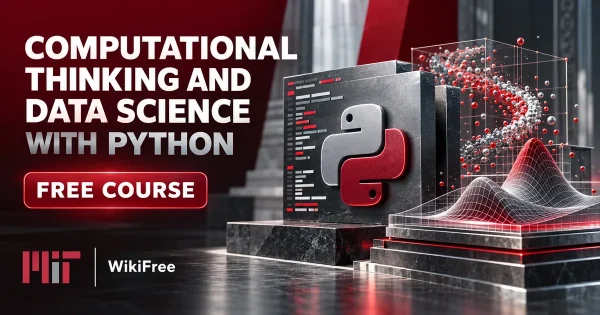
Use Python to study optimization, randomness and evidence from data. The lectures connect computational models with confidence intervals and the interpretation of experimental results.

Explore the systems-engineering process through requirements, design and multidisciplinary trade-offs. The playlist combines instructional lectures with project and teaching reflections from the original course.
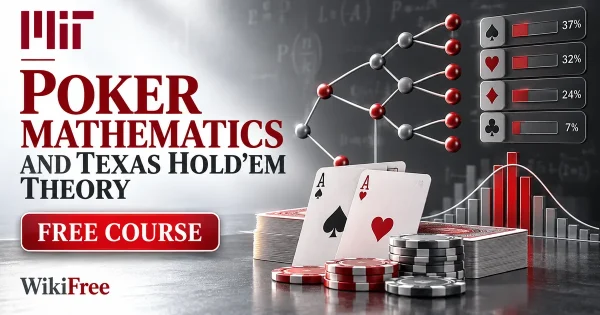
Study probability and strategic reasoning through academic examples from Texas Hold'em. The lectures discuss postflop decisions, tournament models and combinatorial hand analysis without requiring real-money play.
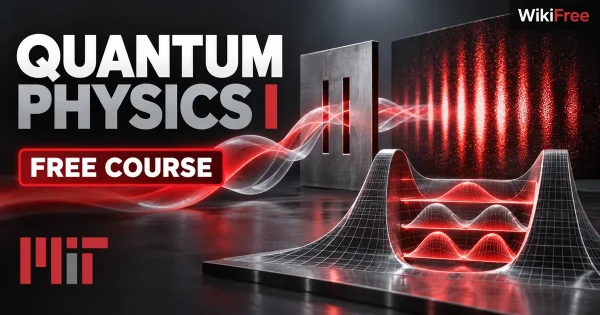
Develop the foundations of quantum mechanics through wavefunctions, time evolution and one-dimensional systems. Focused lessons introduce the mathematical framework behind uncertainty, bound states and scattering.
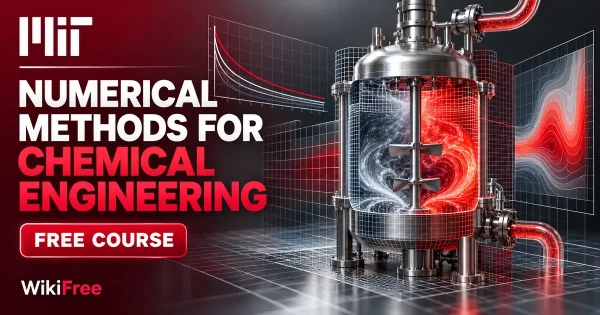
Study numerical techniques used in chemical engineering, including eigenvalue methods, optimization and differential equations. The lectures connect mathematical algorithms with the structure of engineering problems.

Examine environmental decision-making through scenarios involving policy, ethics, impact assessment and risk. The collection encourages comparison of interests, evidence and institutions in planning choices.