The Coursya library
Free Online Courses
Explore free study options. Check the provider, prerequisites, and certificate details before you begin.
Course results
5264 courses
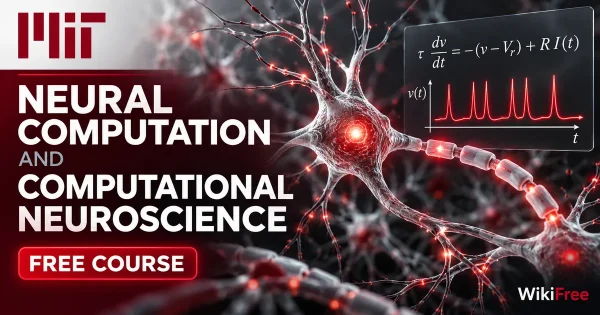
Study nervous systems through computational models. The course connects ionic currents and dendrites with signal analysis and representations, providing a quantitative route into neural computation.
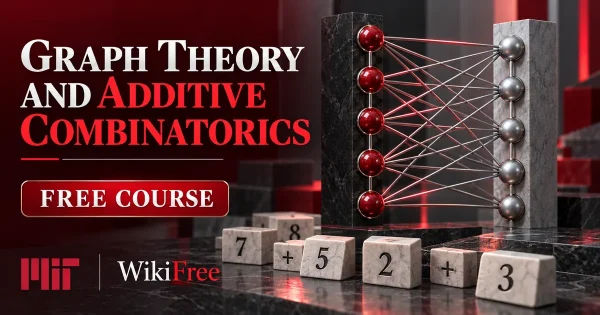
Explore the interplay between graph theory and additive combinatorics. Advanced lectures develop regularity methods, removal lemmas and arithmetic-structure results through detailed proofs.
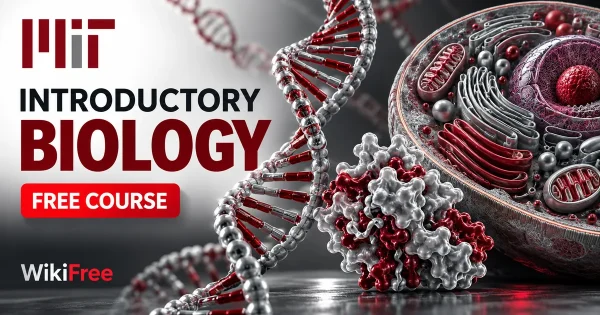
Build an introduction to modern biology through cells, gene regulation, genomes and cancer biology. MIT lectures connect molecular mechanisms with the behavior and organization of living systems.
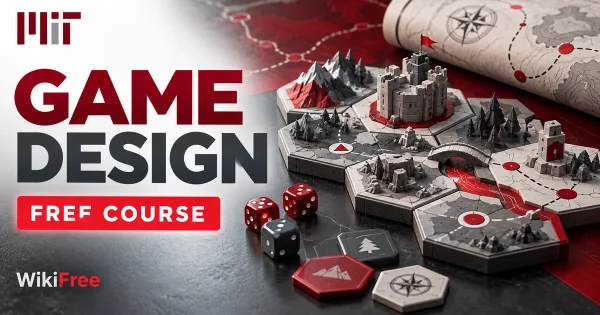
Learn to analyze and develop game ideas through mechanics, dynamics, aesthetics and playtesting. The lectures connect formal design concepts with the choices that shape player experience.

Develop a geometric view of gravity through equivalence, spacetime curvature and gravitational radiation. These advanced lectures connect the mathematical framework of general relativity with physical reasoning.
Study mathematical representations used in large-scale data analysis. The collection connects associative arrays, machine learning and worked computational examples, including sequence comparison.

Explore selected Black Studies material on neoliberalism, rights and cultural change. The playlist combines segments from a focused lecture with reflections on teaching and interpreting cultural phenomena.
Examine fairness as a practical and ethical problem in machine learning. The videos introduce evaluation frameworks and fairness criteria, then explore how bias can appear in data…
Build a foundation for further biology study through molecules, cells, DNA and inheritance. Short lessons help learners reconnect basic chemical ideas with the organization and transmission of…
Reflect on classroom expectations, explanations and participation through short teaching scenarios. This compact collection encourages closer attention to how an instructor's choices affect learners.
Explore how technology changes financial services, from open APIs and customer channels to lending and insurance. MIT classroom discussions connect technical trends with business models and market…
Connect chemistry with the behavior of solid materials. MIT lectures examine bonding, phases, diffraction and solutions, using material properties to give chemical principles an engineering context.