The Coursya library
Free Online Courses
Explore free study options. Check the provider, prerequisites, and certificate details before you begin.
Course results
5264 courses

Explore the theory introduced in private-pilot ground school, including airspace, charts and weather. Watching these lectures does not provide flight instruction, an examination endorsement or a pilot…
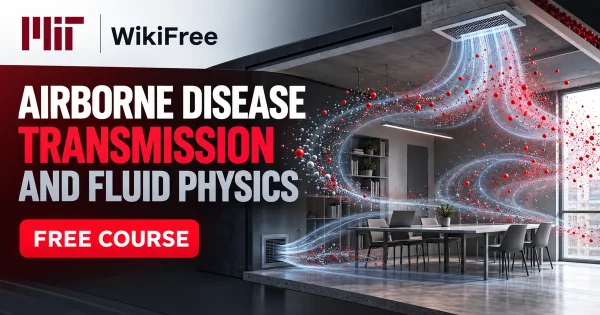
Study fluid-physics models of airborne disease transmission. These archived academic videos use COVID-19 examples to connect particles, ventilation and indoor mixing; they are not current public-health guidance.
Learn classical artificial-intelligence ideas through search, constraints, knowledge representations and learning. MIT lectures and review sessions connect problem-solving techniques with models of intelligent behavior.
Examine economic behavior when preferences and beliefs depart from simple textbook assumptions. Lectures discuss time, reference dependence, social motives and learning in decision-making.
Explore the foundations of nuclear and particle physics through quantum fields, interactions, experimental evidence and neutrinos. The short-lecture format separates concepts into focused study units.
Review selected biochemistry lectures on carbohydrates, membranes and metabolism. The available videos connect glycolysis, lipid oxidation, photosynthesis and nitrogen metabolism rather than presenting every class in the…
Study machine-learning problems shaped by healthcare data and workflows. Lectures examine physiological time series, diagnostic modeling, reinforcement learning and clinical-process automation as research topics.
Extend your algorithmic toolkit through amortized analysis, augmented structures, matching and parameterized complexity. MIT lectures focus on design techniques and arguments about efficiency.

Continue intermediate-to-advanced kanji practice with the vocabulary covered in lessons six through ten. These concise videos complement the Japanese VI learning sequence.
Investigate how human brain systems support cognition. Lectures discuss research methods, navigation, development and networks, connecting experimental evidence with questions about mental function.
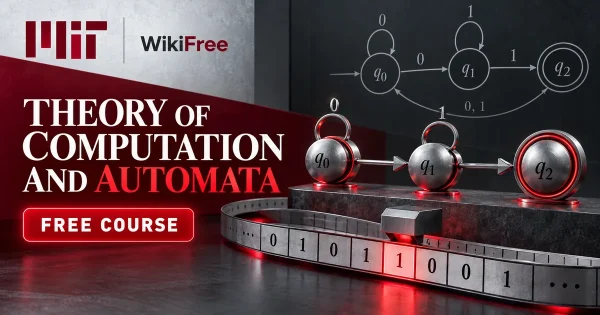
Explore what computation can and cannot do. The lectures progress through automata, formal languages and Turing machines toward computability, complexity and provably difficult problems.
Develop special-relativity concepts through spacetime, causality, motion and particle processes. Short lessons connect mathematical descriptions with the physical consequences of changing reference frames.